Photo Curious


Several years ago I bought a used film camera. At the time, film was basically dead. The only real way I was able to do this was because our town has a used camera store. The camera I got was some old SLR camera. I can’t recall the brand. Perhaps a Minolta x-700? The only film I could get my hands on was black and white film.
This was, for me, the beginning and end of my photography career for years to come. It all came down to that black and white. I couldn’t then, and I can’t now, get into BW pictures. It’s just never done it for me. The camera was great, easy to use, worked perfectly. After I ran that roll of film though the camera, though, I was done.
I handed the camera off to a friend who I thought might like it more, and that was that.
Fast forward about a decade. My wife, Cynthia, had showed some interest in a Polaroid camera we saw, so I got it for her. Right off the bat, that wasn’t for me. Or her, for that matter. The camera was relatively large, the film was expensive, and the pictures flat out just looked bad.
It did spark something, though. Having these physical pictures was great. There was one problem, though. Well, a problem I perceived and created. Google Photos. I had been on the Google train from very early and Photos was a real treat. Unlimited storage at max resolution? Awesome! Then it was unlimited storage at reduced resolution. Fine, still fine. Then it was limited storage, and then, and then, and then…
After a while, pretty much everything Google did really rubbed me the wrong way. This isn’t a unique feeling, “de-Googling your life” has been a thing for ages. I was able to find a way to host my own photo server, and that was that.
All of those pictures are still there. On a hard drive, still connected to the network, just sitting there. That didn’t really solve the problem I had. This problem that, more and more, was feeling worse and worse. Pictures were meaningless. I took them, they went to Google Photos, or Instagram, or my hard drive, and they were gone. I mean, they were there, but I wouldn’t see them. You wouldn’t see them, no-one would.
Then I bought an Instax camera for Cynthia for our anniversary as part of a “couple’s challenge” thing. I was hooked, definitely more than Cynthia was. All of the problems with Polaroid were basically mitigated, save for the price of film. Small cameras, great looking photos, and Instax printers for anything shot on the phone.
I started putting the photos we took in a photo album (and some online because that’s the world we live in). I guess it could be argued that those photos would also disappear, but not really? If friends or family comes over, there is the photo album. I remember being a kid and seeing those in other people’s houses. Those people were more than happy to let you see them. I think there is something inherently inviting about a photo album, so I’m feeling good about that, and that is that.
Now here we are, on to the next step in the evolution. Instax is great, no real complaints, but I do feel like occasionaly photos are wasted. Maybe it’s bad lighting, a weird tic of the camera, or any number of things. Instant photo junkies love that sort of stuff, but I’m trying to save a buck. So it’s my birthday right around the time of this writing, and I got a new camera!
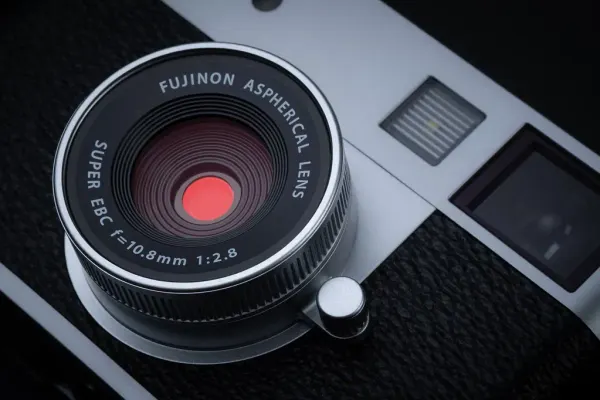
The Fujifilm x-Half. A much maligned, overpriced, and generally unpopular camera. And the object of my obsession. First, it shoots in a format that directly matches the Instax form factor and connects to the printers. Great! Unlimited shots, but I still get the physical photos. Second, it is tiny. The x-Half can fit into any pocket I’ve got with room left over. The videos on YouTube don’t do the size justice. Third, the Fujifilm film simulations. The x-half can easily put out photos that just have “the look.”
Now, I’m not a photographer. At best, I’m photo curious, but I’m excited to get to learn how this camera, and photography in general, works. More to come, and that is that.